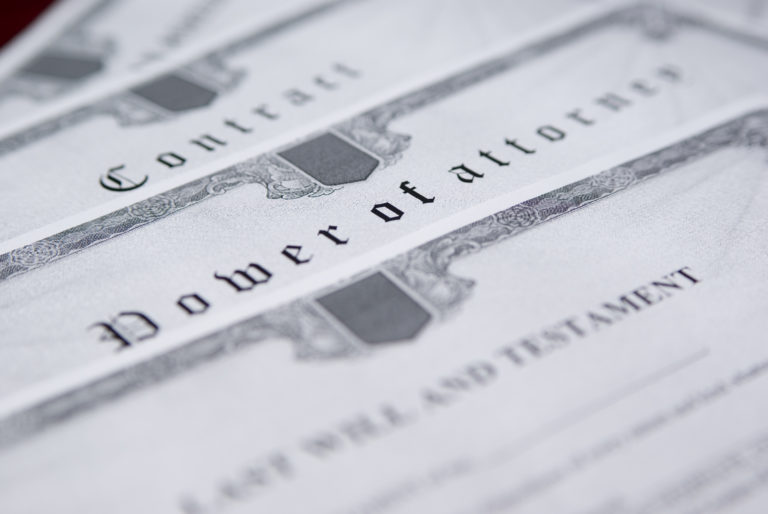
Checklist for Estate Plan’s Success
Every so often, it’s smart to methodically go through your estate planning documents and see if any tweaks are needed. Here’s a checklist to guide you through that mission.

Every so often, it’s smart to methodically go through your estate planning documents and see if any tweaks are needed. Here’s a checklist to guide you through that mission.

With a Power of Attorney, you designate which individuals are in control of your assets and who can take care of your affairs, if you are unable to do so.

An estate plan tells your heirs and the courts how to divide up your assets, but it also helps protect your loved ones from unnecessary hassle and expense–as well as potentially months, even years, tied up in the court system settling your estate.

If a person close to you has been diagnosed with Alzheimer’s disease, it may be time to address some serious financial questions.

Ensuring that your wishes on your medical care are followed is up to you. Take action now while you’re well, or you could lose a say in the matter during a crucial time later.

You can reduce stress and expenses for yourself and your family, if you develop an estate plan that includes these important documents.

Not every power of attorney will be sufficient to manage your affairs, if you become incapacitated.

While most initial meetings with an estate planning attorney will result in some questions you likely have never considered, there are many ways in which you can prepare for a thoughtful and productive estate planning conference that will result in a better understanding of your goals and more efficient use of time with your attorney.

Every estate plan should have a power of attorney, in which you give one or more people authority to act as agents on your behalf when you aren’t able to.
The difference between power of attorney and guardianship is a common question asked by adult children. Both roles share a duty to provide care and oversight of medical care and health.