
Trusts are used to solve problems in estate planning, giving great flexibility in how assets are divided after your death, no matter how modest or massive the size of your estate, according to an article titled “3 Reasons a trust may make sense for your family even though your name isn’t Trump, Gates or Rockefeller” from Market Watch. Don’t worry about anyone thinking your children are “trust fund babies.” There are many pros of trusts in your estate plan.
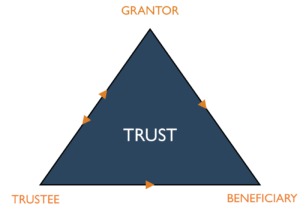 A Revocable Trust is flexible and can be changed at any time by the person who creates the trust, known as the “grantor.” These are commonly used because they allow a high degree of control, while you are living. It’s as if you owned the asset, but you don’t—the trust does. The other two parts of the trust include the trustee, and beneficiary.
A Special Needs Trust, or “SNT,” is used to help a disabled person, without making them ineligible for government benefits. A Charitable Trust is used to leave money to a favorite charity, while providing income to a family member during their lifetime. A real estate trust can be used for real property.
Assets that are placed in trusts do not go through the probate process and can control how your assets are distributed to heirs, both in timing and conditions.
An Irrevocable Trust is permanent and once created, cannot be changed. This type of trust is often used to save on estate taxes by taking the asset out of your taxable estate. Funds you want to take out of your estate and bequeath to grandchildren are often placed in an irrevocable trust. Here’s why this makes sense:
- Reducing estate taxes. While the federal exemption is $11.7 million in 2021, state estate tax exemptions are far lower. New York excludes $6 million, but Massachusetts exempts $1 million. An estate planning attorney in your state will know what your state’s estate taxes are, and how trusts can be used to protect your assets.
- Avoiding family battles. Families are a bit more complicated now than in the past. Trusts can be established for estate planning goals in a way that traditional wills do not. For instance, stepchildren do not enjoy any legal protection when it comes to estate law. If you die when your children are young, a trust can be set up so your children will receive income and/or principal at whatever age you determine. Otherwise, with a will, the child will receive their full inheritance when they reach the legal age set by the state. An 18- or 21-year-old is rarely mature enough to manage a sudden influx of money. You can control how the money is distributed.
- Protect your assets while you are living. Having a trust in place prepares you and your family for the changes that often accompany aging, like Alzheimer’s disease. A trust also protects aging adults from predators who seek to take advantage of them. Elder financial abuse is an enormous problem, when trusting adults give money to unscrupulous people—even family members.
Talk with an estate planning attorney about your wishes and your worries. They will be able to create an estate plan and trusts that will protect you, your family and your legacy.
Reference: Market Watch (Dec. 4, 2020) “3 Reasons a trust may make sense for your family even though your name isn’t Trump, Gates or Rockefeller”